Irish Linen Wrap Replacement
If the wrap on your cue has gone slick, started fraying at the edges, or just doesn't grip the way it used to, that's not something you have to live with — and it's not something duct tape or a rubber grip sleeve should be covering up. A proper wrap replacement restores the feel of the cue and, done correctly, looks like it was never touched.
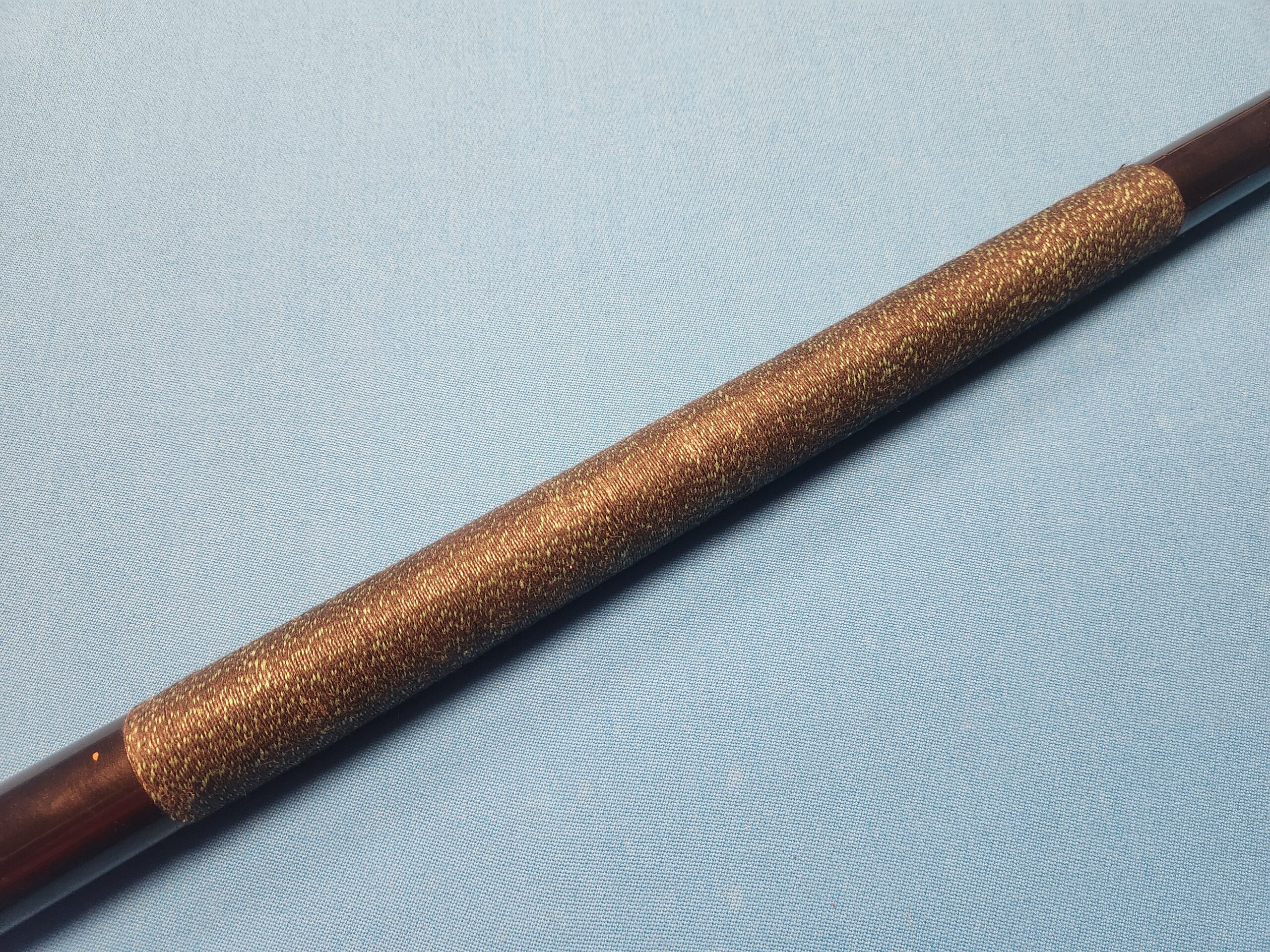
I install genuine Irish linen wraps by hand, using the same tensioning and finishing approach you'd expect from a cue-building shop, not a mail-order sleeve kit.
Hover to Zoom
What an Irish linen wrap actually does
The wrap sits on the butt section of the cue, just below the joint, and it's the one part of the cue your hand is in contact with on every single shot. Its job is simple but important: give you a stable, consistent grip without being so tacky it drags, or so smooth it slides.
Irish linen has been a standard wrap material for a long time because of how it behaves under actual use. It's woven from a coarser, more durable thread than most synthetic wraps, which gives it a slightly textured feel that stays consistent even as your hand sweats or chalk dust builds up over a session. Unlike leather, it doesn't compress and flatten out unevenly over time — a linen wrap that's properly installed tends to age evenly across its whole length instead of developing soft spots where your hand naturally rests.
It's also more resistant to absorbing hand oils and grime than leather, which matters more than people expect. A leather wrap that's seen a few years of regular play often darkens and stiffens unevenly. Linen wears more like a good rope than a piece of leather — it can look aged and used without looking ruined.
Signs your wrap needs to be replaced
You don't need to wait until the wrap is falling apart in your hand. A few signs it's time:
- The grip has gone slick or "glassy" in spots, usually where your hand naturally sits during your stroke
- You can see or feel gaps, loose threads, or separation at the seams or under the collar
- The wrap has shifted or rotated slightly on the butt, which usually means the underlying adhesive has failed
- Discoloration or grime has worked into the material to the point that cleaning doesn't help anymore
- You've had a leather or synthetic wrap fail and want to switch to linen for durability or feel
None of these are cosmetic-only issues. A wrap that's gone slick changes your grip pressure without you realizing it, which shows up as inconsistency in your stroke long before you'd think to blame the cue.
What the replacement process involves
Replacing a wrap correctly means more than winding new material around the butt and gluing it down. The old wrap and any adhesive residue get fully removed down to the substrate, the surface underneath is cleaned and prepped so the new wrap seats properly, and the linen is wound under even, consistent tension from one collar to the other. The collars themselves — the transition points where the wrap meets the finished butt — get trimmed and finished so there's no visible gap or overlap. That collar line is honestly one of the fastest ways to tell a rushed wrap job from a careful one; if you look closely at cues with amateur rewraps, that's almost always where it shows.
Once the wrap is set, the cue gets a final check for consistent diameter and feel along the grip area before it goes back to you.
A quick note on humidity and wrap longevity
Central Massachusetts gets a real seasonal humidity swing, and it affects a linen wrap the same way it affects the rest of the cue — just less dramatically than a shaft. In damp summer months, a linen wrap can feel very slightly tackier; in dry winter conditions, it can feel a touch smoother or drier underhand. This is normal and not a sign of a problem. If your grip feel is changing dramatically with the seasons, though, that's worth mentioning when you bring the cue in, since it can sometimes point to a wrap that wasn't properly tensioned or sealed at installation.
Wrap replacement and the rest of your cue
If your wrap is worn, it's worth having the rest of the cue looked at while it's in the shop. A cue that's seeing enough play to wear out a wrap is often due for a look at the tip and ferrule as well, and if the shaft hasn't been reconditioned in a while, this is a natural point to take care of both at once rather than making two separate trips.
Note on scope: wrap replacement is butt-section work. I don't perform joint, pin, or structural butt repair — if your cue has damage beyond the wrap itself, I'll let you know honestly whether it's something I can take on or something that needs a different specialist.
Serving Worcester and Central Massachusetts
I do this work locally for players in Worcester, Marlborough, Framingham, Shrewsbury, Northborough, and the surrounding area. Whether you're a league player putting real hours on your cue every week or you just want your grip to feel right again, a proper wrap replacement is a straightforward, affordable way to make an old cue feel new in your hand.
FAQ
What is an Irish linen wrap, and why do cues use it? It's a woven linen thread wrap applied to the butt section of a cue to give the player a consistent, stable grip. Cues have used linen wraps for decades because the material holds up to repeated hand contact, chalk dust, and moisture better than many alternatives, and it wears evenly instead of developing soft or slick spots.
How do I know if my cue's wrap needs to be replaced? The most common signs are a grip that's gone slick or glassy in spots, visible gaps or loose threads at the seams, a wrap that's shifted position on the butt, or grime that's worked into the material to the point cleaning won't fix it.
Can a leather or synthetic wrap be replaced with linen? Yes. Switching wrap materials is a common request, whether you're replacing a failed leather wrap or just prefer the feel and durability of linen. The old material and adhesive are fully removed before the new wrap goes on.
How long does a wrap replacement take? Most wrap replacements are a same-day or next-day turnaround, depending on shop schedule. I'll give you a specific estimate when I see the cue.
Will replacing the wrap change how my cue feels or plays? It shouldn't change the cue's balance or hit — the wrap is a grip surface, not a structural or performance component. What it will change is your hand feel, especially if the old wrap had gone slick or uneven.
Does humidity affect a linen wrap the way it affects a shaft? To a much lesser degree. You may notice slight grip feel changes between humid summer months and dry winter months, but dramatic changes usually point to an installation issue rather than normal wear.